Loading...
Serving Oroville, CA and surrounding areas. (530) 854-8628
Oroville summers push past 105 degrees. If your attic is under-insulated, your AC cannot keep up - and your PG&E bill shows it every month. Blown-in insulation fills every gap and corner, creating a real thermal barrier in just a few hours.
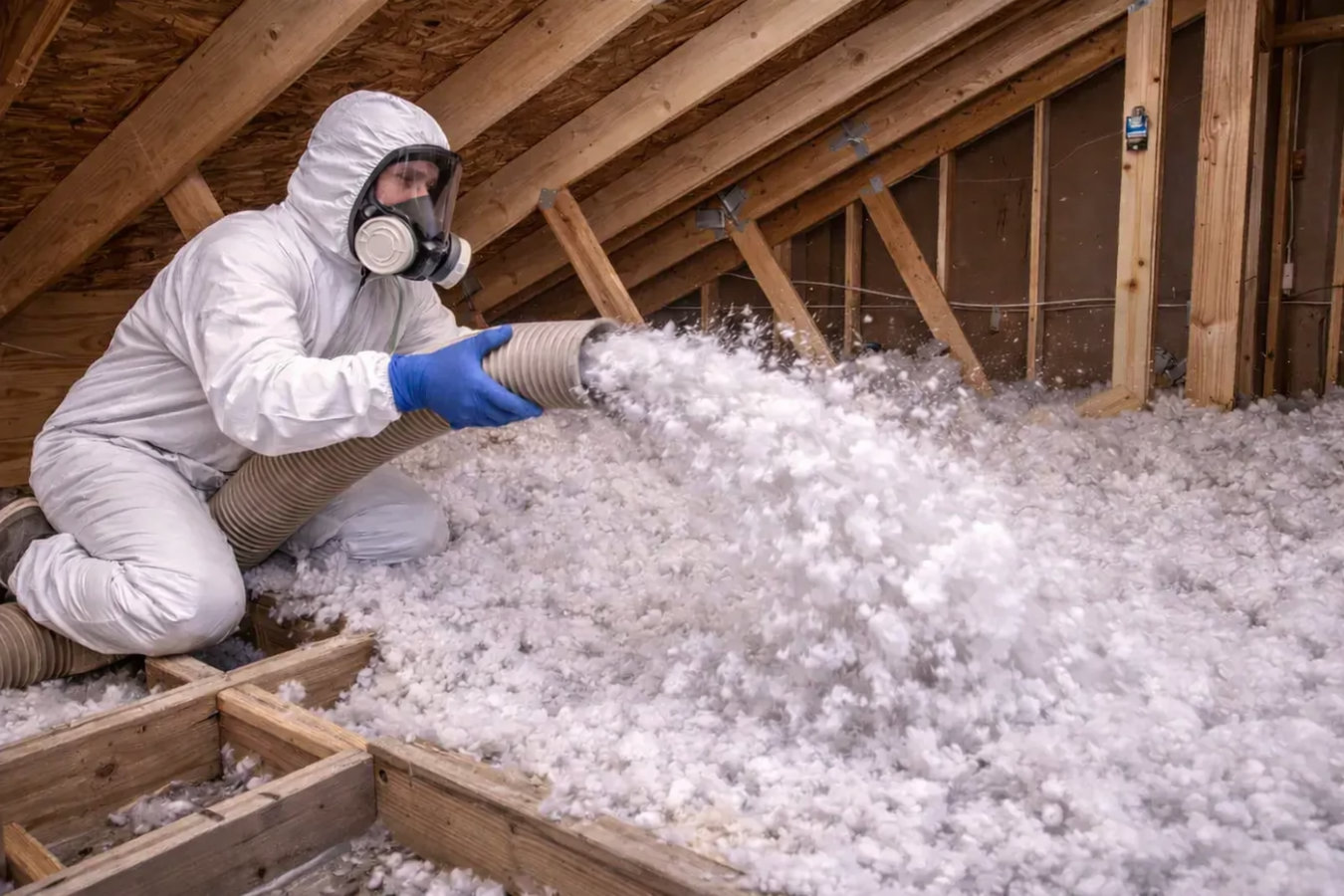
Blown-in insulation in Oroville, CA means loose fiberglass or cellulose material is blown through a hose into your attic floor until it reaches the depth your climate zone needs - most standard homes are done in two to four hours with the blowing machine running from outside. The material fills corners, odd-shaped spaces, and gaps that rigid batt rolls cannot reach, creating a more complete thermal barrier than most older homes have.
Oroville sits in one of the hotter parts of California, where summer temperatures regularly exceed 105 degrees for weeks at a time. A thin attic turns into a radiant heat source over your ceiling that forces your air conditioner into an impossible fight. If your home was built before 1980 - which describes a large share of Oroville housing - the original insulation was installed to standards that are far below what is needed for this climate. Many of those homes have three to four inches of compressed, aged material doing a fraction of the work it should. Our home insulation service can address multiple areas in a single visit when the attic is not the only concern.
The U.S. Department of Energy provides guidance on recommended R-values by climate zone at energy.gov/energysaver/insulation. For Oroville's climate, the recommended range for attics is R-38 to R-60 - roughly 10 to 15 inches of blown-in material.
If your air conditioner runs almost continuously during Oroville's summer heat waves but rooms still feel stuffy and warm, the attic is likely the culprit. Heat radiates down through a thin attic ceiling all day, overwhelming your cooling system. Waiting means higher PG&E bills every month that passes.
When your PG&E bill climbs sharply from June through September and your habits have not changed, thin or aged attic insulation is one of the first things worth checking. Comparing year-over-year bills can reveal the pattern quickly.
A quick flashlight check tells you a lot. If the wooden ceiling joists are visible above the attic floor, your insulation is below the minimum needed for this climate. Those joists should be buried and invisible under proper coverage.
If indoor surfaces collect extra dust or you can smell wildfire smoke inside with windows closed, your attic has air gaps. Those same gaps that let smoke in let your cooled air out all summer - addressing insulation and sealing together solves both problems at once.
Before any material goes in, we seal air gaps around light fixtures, plumbing penetrations, and the attic hatch - skipping this step is one of the most common reasons homeowners do not feel a difference after insulation work. Then we blow material evenly across the entire attic floor, paying extra attention to edges and corners where heat transfer is highest. For homes where walls are also under-insulated, our attic insulation service can be paired with wall work when both areas need attention.
We use both fiberglass and cellulose blown-in materials depending on your attic conditions and your preferences. Both perform well in this climate. Cellulose is made from recycled material and is blown in slightly thicker to account for minor settling over time. Fiberglass is lighter and stable. We explain the differences during the estimate visit so you can make an informed choice. PG&E rebates may apply to qualifying jobs - we walk you through what your project qualifies for before you sign anything.
Lightweight loose-fill that does not settle significantly over time - a good fit for most Oroville attics.
Made from recycled paper treated for fire resistance, blown in slightly thicker to account for minor settling.
The most common application - filling the attic floor to the recommended depth for this climate zone.
Adding material over what is already there when current depth is too thin but undamaged.
Oroville's northern Sacramento Valley location means summers are long, hot, and relentless. Average highs in July and August sit in the mid-to-upper 90s, with heat waves pushing well past 105 degrees for stretches of a week or more. An attic without adequate insulation becomes a radiant heat source that overwhelms residential cooling systems - the temperature difference between a properly insulated home and a poorly insulated one is felt immediately during these stretches. Homeowners in Thermalito and throughout the surrounding area deal with the same conditions.
Oroville's housing stock adds another layer. Many homes here were built in the 1950s through 1970s with insulation standards far below what California now recommends. If your home was built before 1980, the attic likely has three to four inches of original material that has compressed and aged over decades. Wildfire smoke infiltration is also a real concern - the 2018 Camp Fire sent heavy smoke and ash through Butte County, and homes with air gaps took it inside. Residents near Paradise and throughout the foothills benefit from the combined protection that blown-in insulation and air sealing provides during fire season.
We respond within 1 business day. A quick conversation covers your home's age, size, and what is prompting the call - there are no trick questions.
We visit your attic in person, measure what is there, and check for air gaps or moisture. You get a written estimate before any decision is made - no pressure.
The blowing machine runs from outside. The crew works through the attic hatch, filling evenly from edges inward. Most standard homes are done in two to four hours.
Before leaving, we verify coverage throughout the attic and leave depth markers you can check yourself. The area around the hatch is cleaned before we go.
We respond within 1 business day - no obligation. After you submit, someone from our office will call to schedule your free on-site estimate at a time that works for you. There is no cost and no commitment to the estimate visit.
(530) 854-8628Our experienced crew knows Oroville homes inside and out. We document the coverage we install and make that record available on request before any work begins.
We know the housing stock here - the older neighborhoods near downtown, the homes along the Feather River corridor, and the manufactured homes throughout the area. That local familiarity matters on job day.
You should be able to verify the work yourself. We leave ruler-style depth markers throughout the attic so you can confirm coverage with a flashlight - no guesswork required.
PG&E offers rebates for qualifying insulation upgrades in Oroville. We walk you through what your project qualifies for upfront so you do not leave money unclaimed after the job is done.
Every one of these proof points matters in Oroville's housing market. Older homes need a contractor who understands what they are walking into, and homeowners on tighter budgets need someone who tells them about rebates before the job - not after. That is what we bring to every estimate visit. The North American Insulation Manufacturers Association maintains installation quality standards that guide how reputable contractors approach every job.
A full-home approach that coordinates attic, wall, and crawl space insulation into one cohesive upgrade.
Learn MoreDedicated attic service covering inspection, air sealing prep, and complete coverage to recommended depth.
Learn MoreOroville's cooling season is long - the sooner your attic is properly insulated, the sooner your home and your PG&E bill reflect it.